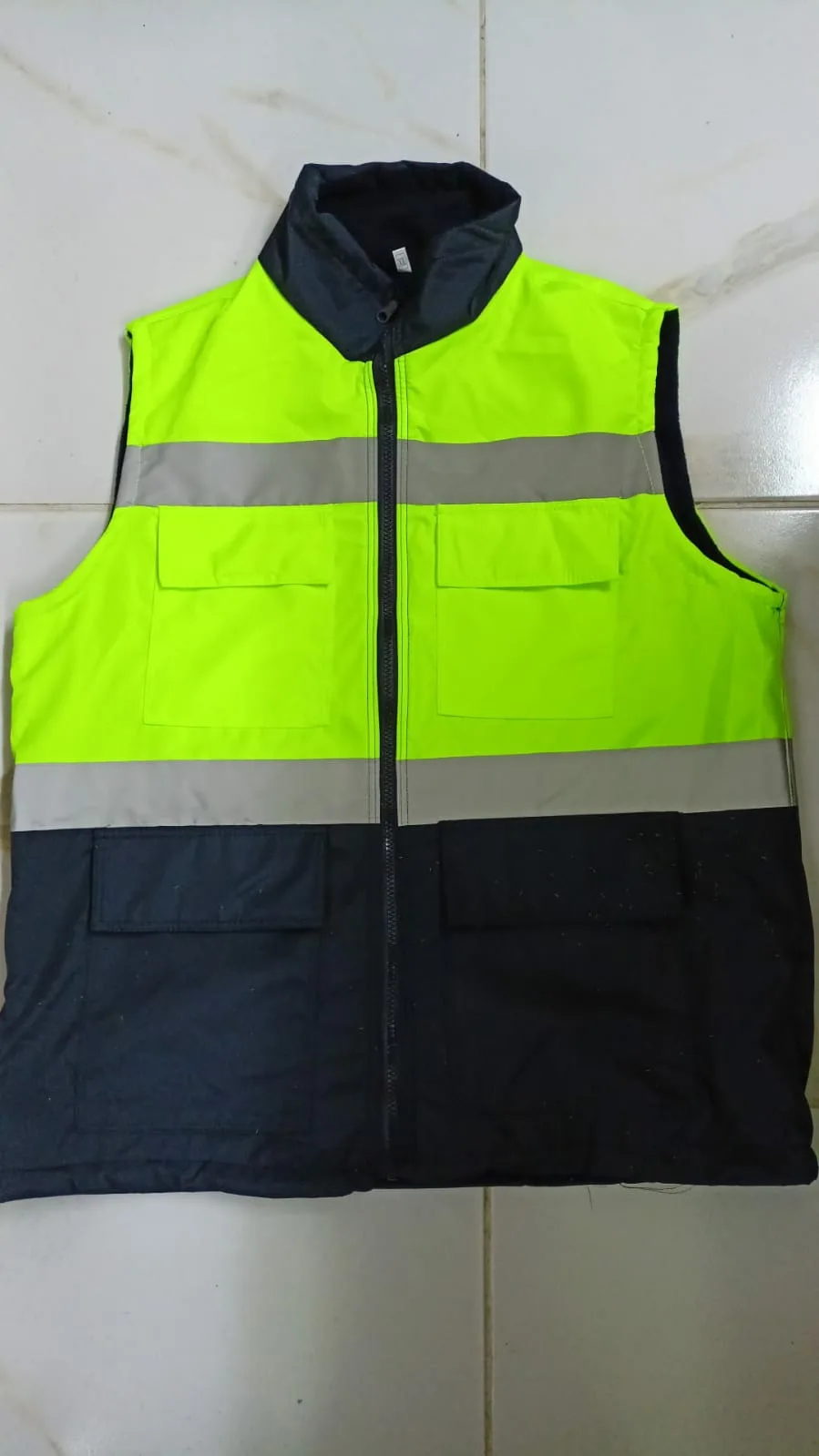
Mining Safety Vests: Built for the Harshest Environments
The mining sector — encompassing underground mines, open-pit operations, quarries, and mineral processing plants — operates in conditions that destroy standard workwear within days. Mining safety vests must endure constant abrasion from rock faces and ore handling, exposure to mineral dust, hydraulic fluid splashes, diesel fumes, extreme temperature variations from sub-zero surface conditions to high-heat underground zones, and the constant physical demands of climbing, lifting, and crawling. İlke Textiles has developed a mining-specific vest line that addresses each of these challenges through material selection, construction methods, and design features proven in mining environments across Turkey, the Balkans, and Central Asia.
CORDURA-Reinforced Construction
Standard workwear fabrics fail quickly in mining environments because they cannot withstand the constant surface abrasion from rough rock, metal structures, and equipment. İlke Textiles addresses this with CORDURA fabric reinforcement at high-wear zones — shoulders, elbows (on sleeve-style vests), lower front panels, and pocket edges. CORDURA is an air-textured nylon fabric originally developed for military gear that offers exceptional tear strength and abrasion resistance while remaining relatively lightweight. Our mining vests combine a gabardine or bondit base fabric with strategically placed CORDURA panels, delivering durability where it matters most without adding unnecessary weight across the entire garment.
Underground Visibility Solutions
Underground mining presents visibility challenges fundamentally different from surface operations. There is zero ambient light — all visibility depends on cap lamps, vehicle headlights, and fixed tunnel lighting. In these conditions, the retroreflective component of hi-vis clothing is far more important than the fluorescent background color, because fluorescent materials require UV or daylight wavelengths to function. Our underground mining vests maximize retroreflective tape coverage, with 50mm bands on horizontal torso circuits, vertical shoulder-to-waist strips, and optional arm bands. We specify micro-prismatic retroreflective tape that delivers superior retroreflection coefficients at the wide entrance angles typical of cap lamp illumination, where traditional glass-bead tapes lose significant performance.
For mines implementing proximity detection systems, İlke Textiles can integrate RFID tag pockets and antenna-compatible zones into the vest design. These features support personnel tracking and collision avoidance systems that are increasingly required in modern mining operations.
Flame-Retardant Options for Mining
Many mining operations include zones where flame-retardant PPE is required — near refueling stations, in processing plants where combustible materials are present, adjacent to welding and cutting operations, and in coal mines where methane risks exist. İlke Textiles offers FR-treated vest options that comply with EN ISO 11612 (protection against heat and flame) and EN ISO 14116 (limited flame spread materials). Our FR treatment is a durable chemical finish applied to the fabric that maintains its protective properties through 50 or more industrial wash cycles. Importantly, FR treatment does not significantly alter the fabric's feel, weight, or breathability — workers accept and wear FR vests as readily as untreated versions.
Chemical and Dust Resistance
Mining environments expose vests to a range of substances including mineral dust (silica, coal, ore fines), hydraulic fluids, diesel fuel, lubricants, blasting residues, and process chemicals. Our heavy-duty gabardine fabric provides inherent resistance to light chemical splash and dust penetration due to its tight weave structure. For operations involving more aggressive chemical exposure, we can apply additional chemical-resistant treatments. All our mining vest fabrics are tested for colorfastness and structural integrity after exposure to common mining chemicals, ensuring that the garment maintains its hi-vis properties and structural integrity throughout its service life.
Extreme Climate Configurations
Mining operations span climate zones from sub-Arctic to tropical desert. İlke Textiles manufactures mining vests in configurations suited to each extreme. For cold climate mining — common in Central Asia, Scandinavia, and high-altitude operations — we produce insulated mining vests with 300 GSM polar fleece lining, wind-resistant bondit outer shells, and thermal collar extensions. For hot climate mining — common in the Middle East, Africa, and Australia — we produce ventilated mesh-panel vests in lightweight but durable fabrics, with moisture-wicking properties and UPF-rated materials for sun protection during surface operations.
Compliance Across Mining Jurisdictions
Mining PPE requirements vary significantly across jurisdictions. European mines operate under EU PPE Regulation 2016/425 with EN ISO 20471 for visibility. Russian and EAEU mines require compliance with GOST R 12.4.236 and the EAC technical regulations. Middle Eastern operations — particularly those managed by international mining companies — often specify ANSI/ISEA 107-2020. İlke Textiles has export experience across all these regulatory environments and can configure production to meet your specific jurisdiction's requirements. Our export documentation team prepares all necessary certificates, test reports, and declarations of conformity for customs clearance in your country.